
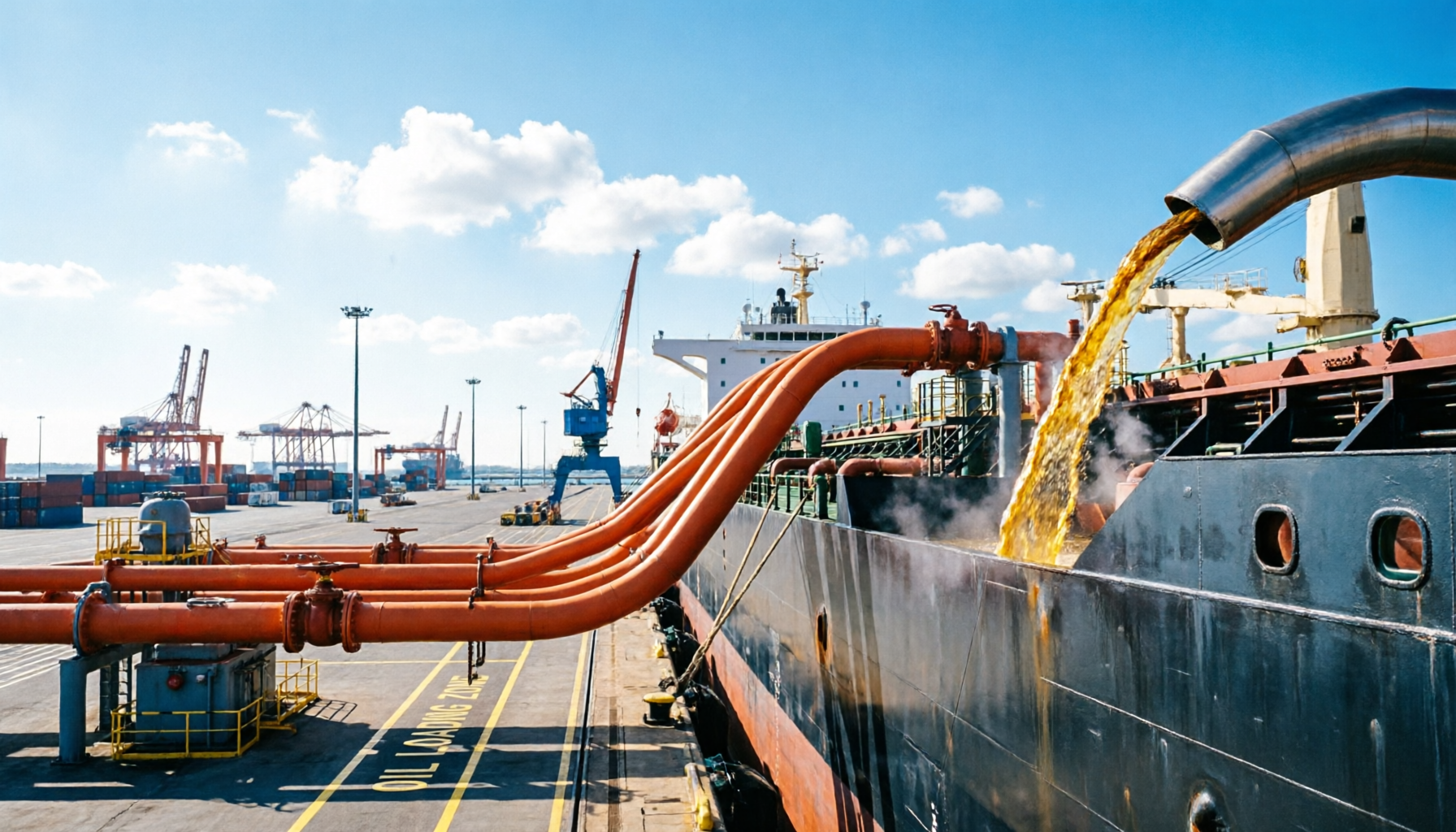
Navigating Bulk Tanker Vessel Shipping for Large-Scale Edible Oil Consignments
October 8, 2026
Introduction to Bulk Tanker Vessel Shipping
For large-scale edible oil transactions, bulk tanker vessel shipping is often the most cost-effective logistics option. When volumes exceed what flexitanks or ISO tanks can handle economically, ocean-going tanker vessels become the standard mode of transport for international buyers, crushers, and refiners.
This guide provides a practical overview of the key considerations for B2B buyers and procurement teams involved in bulk edible oil shipping by tanker vessel.
When Does Tanker Shipping Make Sense?
Tanker vessel shipping is typically justified under the following conditions:
- Volume threshold: Consignments of 500 metric tonnes or more, where per-tonne freight costs drop significantly compared to containerized options.
- Regular trade lanes: Established routes between major oil-exporting and oil-importing ports with frequent vessel availability.
- Single-product shipments: When the entire cargo is one type of edible oil, reducing contamination risk and simplifying documentation.
- Cost optimization: When the freight savings over flexitanks or ISO tanks justify the additional coordination and port handling requirements.
FOSFA Requirements for Edible Oil Tanker Shipping
The Federation of Oils, Seeds and Fats Associations (FOSFA) sets the international standard for bulk oil shipping. Key FOSFA requirements include:
Previous Cargo Restrictions
FOSFA maintains a list of prohibited previous cargoes. Tanks that have carried certain chemicals, petroleum products, or other restricted substances within a specified number of prior voyages cannot be used for edible oil transport. Buyers should always request the vessel's previous cargo history before confirming a charter.
Tank Coating and Material Standards
Tanks must be constructed of or coated with materials approved for food-grade contact. Common acceptable coatings include epoxy-phenolic, zinc silicate, and stainless steel. The coating must be intact, free from cracks, and compatible with the specific oil being shipped.
Heating System Requirements
Many edible oils, such as palm oil and certain specialty fats, require temperature maintenance during transit. FOSFA specifies that heating systems must use clean thermal media and that heating coils must not leak into the cargo. Steam heating coils are common, but the steam must be generated from potable water sources.
Tank Cleanliness and Inspection Protocols
Tank cleanliness is one of the most critical factors in bulk edible oil shipping. The following protocols are standard practice:
| Inspection Item | Standard | Verification Method |
|---|---|---|
| Visual cleanliness | No visible residue, rust, or scaling | Independent surveyor inspection |
| Odor test | No residual odor from previous cargo | Surveyor nose test + water wash test |
| Wall wash test | Pass KMnO4 or equivalent test | Laboratory analysis of wash samples |
| Previous cargo declaration | Last 3 cargoes declared and FOSFA-compliant | Ship's cargo record book review |
| Heating coil pressure test | No leaks under operating pressure | Hydrostatic pressure test certificate |
Key Shipping Documents
Proper documentation is essential for smooth customs clearance, quality assurance, and payment processing. The following documents are typically required:
- Bill of Lading (B/L): The primary transport document, issued by the carrier or ship owner, confirming receipt of cargo.
- Certificate of Quality (CoQ): Issued by an independent surveyor (e.g., SGS, Intertek, Bureau Veritas) at the load port, confirming the oil meets contractual specifications.
- Certificate of Origin (CoO): Required for customs clearance and preferential tariff claims under trade agreements.
- Tank Cleanliness Certificate: Issued by the surveyor after pre-loading tank inspection.
- Ullage Report: Records the quantity loaded, measured by tank soundings before and after loading.
- Temperature Log: For heated cargoes, a record of temperature readings taken at regular intervals during the voyage.
- FOSFA Contract Compliance Statement: Confirms the shipment adheres to the relevant FOSFA contract terms.
Heating Systems and Temperature Management
Temperature control during transit is critical for oils that solidify or degrade at certain temperatures. Key considerations include:
Heating Methods
- Steam heating coils: The most common method, using steam generated from the vessel's boiler system. Suitable for most edible oils.
- Thermal oil heating: Uses a closed-loop thermal fluid system. Preferred for temperature-sensitive oils requiring precise control.
- Electrical heating: Less common on ocean-going vessels but used on some specialized tankers for high-value specialty oils.
Temperature Ranges by Oil Type
| Oil Type | Loading Temperature | Transit Temperature | Discharge Temperature |
|---|---|---|---|
| Refined Sunflower Oil | Ambient (15-25°C) | Ambient (no heating required) | Ambient |
| Refined Soybean Oil | Ambient (15-25°C) | Ambient (no heating required) | Ambient |
| Crude Palm Oil (CPO) | 50-55°C | 45-50°C | 50-55°C |
| Refined Palm Olein | 35-40°C | 30-35°C | 35-40°C |
| Coconut Oil | 35-40°C | 30-35°C | 35-40°C |
Practical Tips for B2B Buyers
Based on industry experience, here are actionable recommendations for buyers arranging bulk tanker shipments:
- Engage an independent surveyor early. Appoint a reputable survey company (SGS, Intertek, or similar) at both load and discharge ports before the vessel arrives.
- Verify vessel suitability in advance. Request the vessel's previous cargo history, tank coating certificates, and FOSFA compliance status at least two weeks before the loading window.
- Include clear quality clauses in the contract. Specify maximum free fatty acid (FFA) limits, moisture and impurity thresholds, and color specifications at both load and discharge ports.
- Plan for demurrage. Port congestion and weather delays are common. Negotiate reasonable laytime and demurrage rates in the charter party.
- Monitor transit conditions. For heated cargoes, request daily temperature reports from the vessel master and verify that heating systems are functioning correctly throughout the voyage.
- Conduct discharge sampling. Take composite samples from each tank at discharge and send them for independent laboratory analysis before accepting the cargo.
Conclusion
Bulk tanker vessel shipping remains the backbone of international edible oil trade for large-volume consignments. By understanding FOSFA requirements, ensuring tank cleanliness, managing temperature conditions, and maintaining rigorous documentation, B2B buyers can minimize risk and ensure consistent oil quality from origin to destination.
At HowFun Oil, we support our bulk buyers with comprehensive shipping coordination, quality documentation, and logistics expertise across all major edible oil trade lanes. Contact us for a customized shipping proposal.
Custom Packaging Solutions
From 100ml retail bottles to 200L foodservice pails, we offer complete packaging solutions with custom branding and label design.
Bulk Edible Oil Supply
Flexible bulk packaging options including flexitank (24,000L), IBC drum (1,000L), and steel drums (200L). Fast delivery with full export documentation.
Explore Bulk Supply Options →Explore Our Products
Browse our full range of bulk edible oils for importers, distributors, and food manufacturers.
Need Custom Packaging or Private Label?
We offer full OEM/ODM services including custom formulation, private label branding, and flexible packaging starting from 6,000 bottles.
Explore Custom Services →See How We Help Our Clients
From restaurant chains to international distributors, discover how our edible oil solutions drive business growth for partners worldwide.
View Case Studies →Get a Quote
Fill out the form below and we'll get back to you within 24 hours