
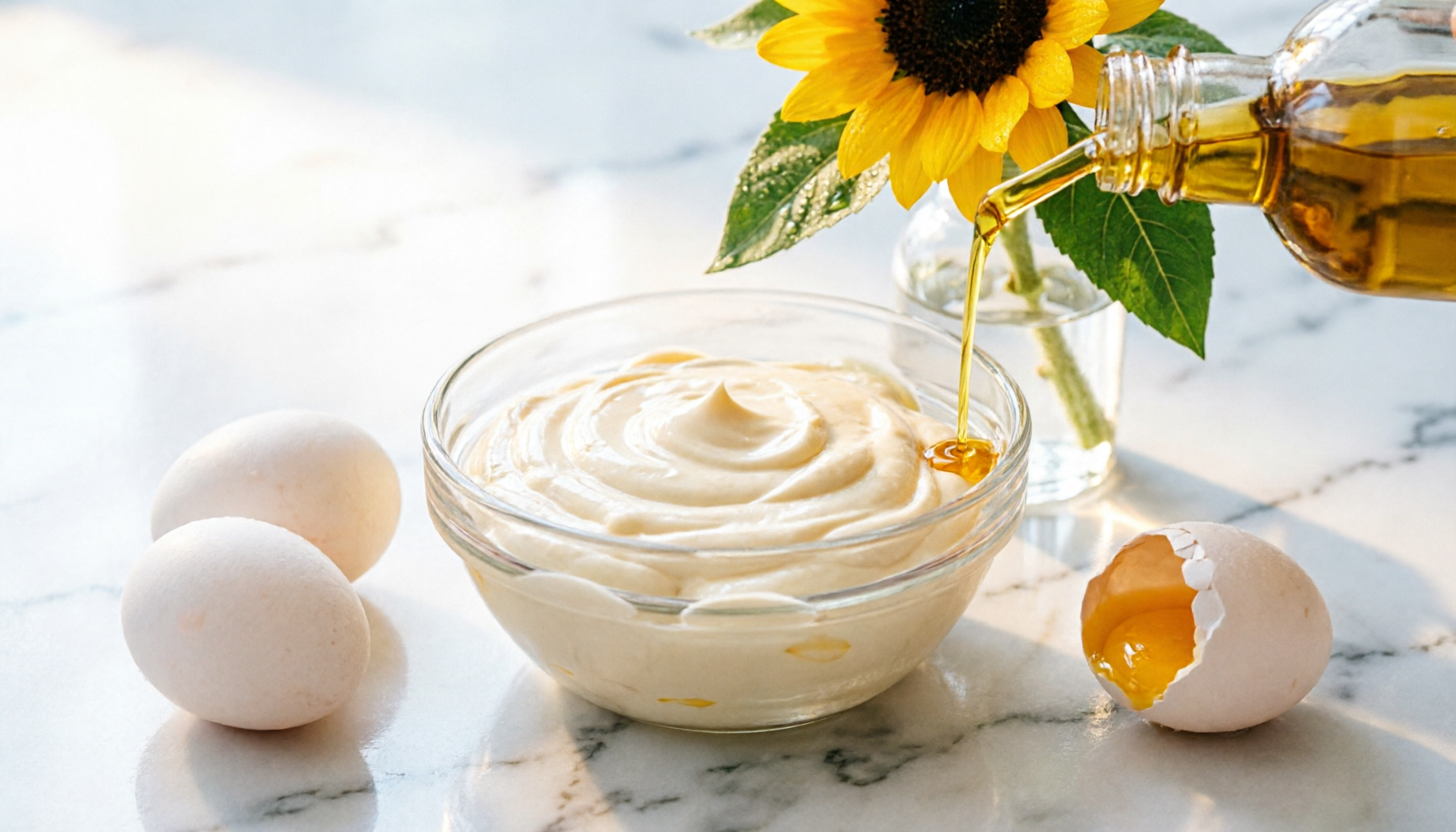
Why Premium Refined Sunflower Oil is the Preferred Choice for Mayonnaise Production
October 8, 2026
Introduction
Mayonnaise is one of the most widely consumed condiments worldwide, and the quality of the oil used in its production directly affects the final product's texture, flavor, shelf life, and consumer appeal. Among the various edible oils available, premium refined sunflower oil has emerged as the preferred choice for professional mayonnaise manufacturers.
This article explores the functional, nutritional, and commercial reasons why refined sunflower oil outperforms alternatives in mayonnaise production, and provides guidance on selecting the right grade and supplier.
Functional Advantages of Sunflower Oil in Mayonnaise
Neutral Flavor Profile
Refined sunflower oil has an exceptionally mild, clean taste that allows the other ingredients in mayonnaise — egg yolk, vinegar, mustard, and seasonings — to shine without interference. Unlike olive oil or unrefined oils, which impart strong characteristic flavors, sunflower oil acts as a neutral carrier that enhances rather than competes with the intended flavor profile.
Excellent Emulsion Stability
Mayonnaise is an oil-in-water emulsion, and the stability of this emulsion is critical for product quality. Refined sunflower oil contributes to stable emulsions due to:
- Optimal viscosity: The oil's viscosity at room temperature facilitates smooth incorporation into the aqueous phase during high-shear mixing.
- Low free fatty acid content: Premium refined grades have FFA levels below 0.1%, reducing the risk of emulsion breakdown during storage.
- Consistent fatty acid composition: Batch-to-batch uniformity ensures predictable emulsion behavior in production.
Smooth Texture and Mouthfeel
The fatty acid composition of sunflower oil produces mayonnaise with a creamy, smooth texture that consumers associate with premium quality. The oil's liquid state at refrigeration temperatures also prevents the mayonnaise from becoming grainy or separating when stored in the refrigerator.
High-Linoleic vs High-Oleic Sunflower Oil: Which to Choose?
Sunflower oil is available in two main grades, each with distinct properties for mayonnaise production:
| Property | High-Linoleic Sunflower Oil | High-Oleic Sunflower Oil |
|---|---|---|
| Oleic acid (C18:1) | 15-20% | 80-90% |
| Linoleic acid (C18:2) | 65-70% | 3-10% |
| Oxidative stability | Moderate (shorter shelf life) | Excellent (extended shelf life) |
| Flavor stability | Good for 6-9 month shelf life | Excellent for 12-18 month shelf life |
| Cost | Lower | Higher (typically 10-20% premium) |
| Best application | Standard mayonnaise, fast turnover | Premium mayonnaise, extended shelf life |
Recommendation
For standard mayonnaise with a 6-9 month shelf life, high-linoleic refined sunflower oil provides excellent results at a competitive cost. For premium or organic mayonnaise products requiring 12+ month shelf life, high-oleic sunflower oil is the superior choice due to its enhanced oxidative stability.
Key Quality Parameters for Mayonnaise-Grade Sunflower Oil
When sourcing refined sunflower oil for mayonnaise production, the following quality parameters should be specified in purchase contracts:
| Parameter | Specification | Importance |
|---|---|---|
| Free Fatty Acid (FFA) | ≤ 0.1% (as oleic acid) | Low FFA ensures emulsion stability and neutral taste |
| Peroxide Value (PV) | ≤ 1.0 meq/kg | Low PV indicates fresh oil with minimal oxidation |
| Color (Lovibond 5.25") | ≤ 1.5 Red / 15 Yellow | Light color ensures clean appearance in mayonnaise |
| Moisture and Impurities | ≤ 0.05% | Low moisture prevents microbial growth and hydrolysis |
| Cold Test (0°C, 5.5 hrs) | Clear and brilliant | Ensures no crystallization at refrigeration temperatures |
| Soap Content | ≤ 5 ppm | Residual soap causes off-flavors and emulsion issues |
| Phosphorus Content | ≤ 5 ppm | Low phosphorus prevents darkening during storage |
The Refining Process: Why Premium Refined Matters
The term "premium refined" refers to sunflower oil that has undergone a complete multi-step refining process:
- Degumming: Removal of phospholipids and mucilaginous substances using water or acid treatment.
- Neutralization (Deacidification): Removal of free fatty acids using caustic soda or physical refining methods.
- Bleaching: Removal of pigments, oxidation products, and trace metals using activated clay or carbon.
- Winterization (Dewaxing): Removal of waxes and high-melting-point triglycerides to ensure clarity at low temperatures — critical for mayonnaise stored in refrigerators.
- Deodorization: Steam distillation under vacuum to remove volatile odor and flavor compounds, producing the neutral taste essential for mayonnaise.
Each step contributes to the oil's suitability for mayonnaise. Skipping or inadequately performing any step can result in off-flavors, poor emulsion stability, or visual defects in the final product.
Comparison with Alternative Oils
| Oil Type | Flavor Neutrality | Emulsion Stability | Cold Stability | Cost | Overall Suitability |
|---|---|---|---|---|---|
| Refined Sunflower Oil | Excellent | Excellent | Excellent | Medium | ★★★★★ |
| Refined Soybean Oil | Good | Good | Good | Low | ★★★★ |
| Refined Rapeseed Oil | Good | Good | Moderate | Medium | ★★★ |
| Extra Virgin Olive Oil | Poor (strong flavor) | Good | Poor | High | ★★ (niche only) |
| Refined Corn Oil | Good | Good | Moderate | Medium | ★★★ |
Sourcing Considerations for Mayonnaise Manufacturers
Supplier Qualification
When selecting a sunflower oil supplier for mayonnaise production, verify the following:
- Food safety certifications: The supplier should hold FSSC 22000, BRC, or equivalent GFSI-recognized certification.
- Traceability: Full traceability from seed origin to finished oil, with lot-level documentation.
- Consistent quality: Review at least 12 months of Certificate of Analysis (CoA) data to confirm batch-to-batch consistency.
- Refining capability: Ensure the supplier performs full refining (including winterization) in-house or through verified partners.
Packaging and Logistics
- Bulk formats: Flexitanks (20-24 MT), ISO tanks, or tanker vessels for large-scale production.
- Intermediate formats: IBC totes (900-1,000 kg) for medium-scale operations.
- Shelf life management: Request oil with a minimum remaining shelf life of 12 months at delivery, stored under nitrogen blanket if possible.
- Storage conditions: Maintain oil at 15-25°C, away from direct sunlight, in stainless steel or food-grade epoxy-lined tanks.
Conclusion
Premium refined sunflower oil offers the ideal combination of neutral flavor, excellent emulsion stability, cold clarity, and cost-effectiveness that makes it the preferred choice for mayonnaise manufacturers worldwide. Whether producing standard or premium mayonnaise, selecting the right grade — high-linoleic for cost efficiency or high-oleic for extended shelf life — ensures consistent product quality and consumer satisfaction.
HowFun Oil supplies premium refined sunflower oil in both high-linoleic and high-oleic grades, optimized for mayonnaise and emulsion-based product manufacturing. Contact us for samples, specifications, and customized supply solutions.
Looking for Bulk Sunflower Oil?
Explore our refined and crude sunflower oil options, available in flexitank, IBC drum, and retail packaging. ISO 22000 certified with full export documentation.
Edible Oil Applications
Discover how our oils are used across foodservice, food manufacturing, and retail. Find the right oil for your specific application.
Explore Applications →Explore Our Products
Browse our full range of bulk edible oils for importers, distributors, and food manufacturers.
Need Custom Packaging or Private Label?
We offer full OEM/ODM services including custom formulation, private label branding, and flexible packaging starting from 6,000 bottles.
Explore Custom Services →See How We Help Our Clients
From restaurant chains to international distributors, discover how our edible oil solutions drive business growth for partners worldwide.
View Case Studies →Get a Quote
Fill out the form below and we'll get back to you within 24 hours