
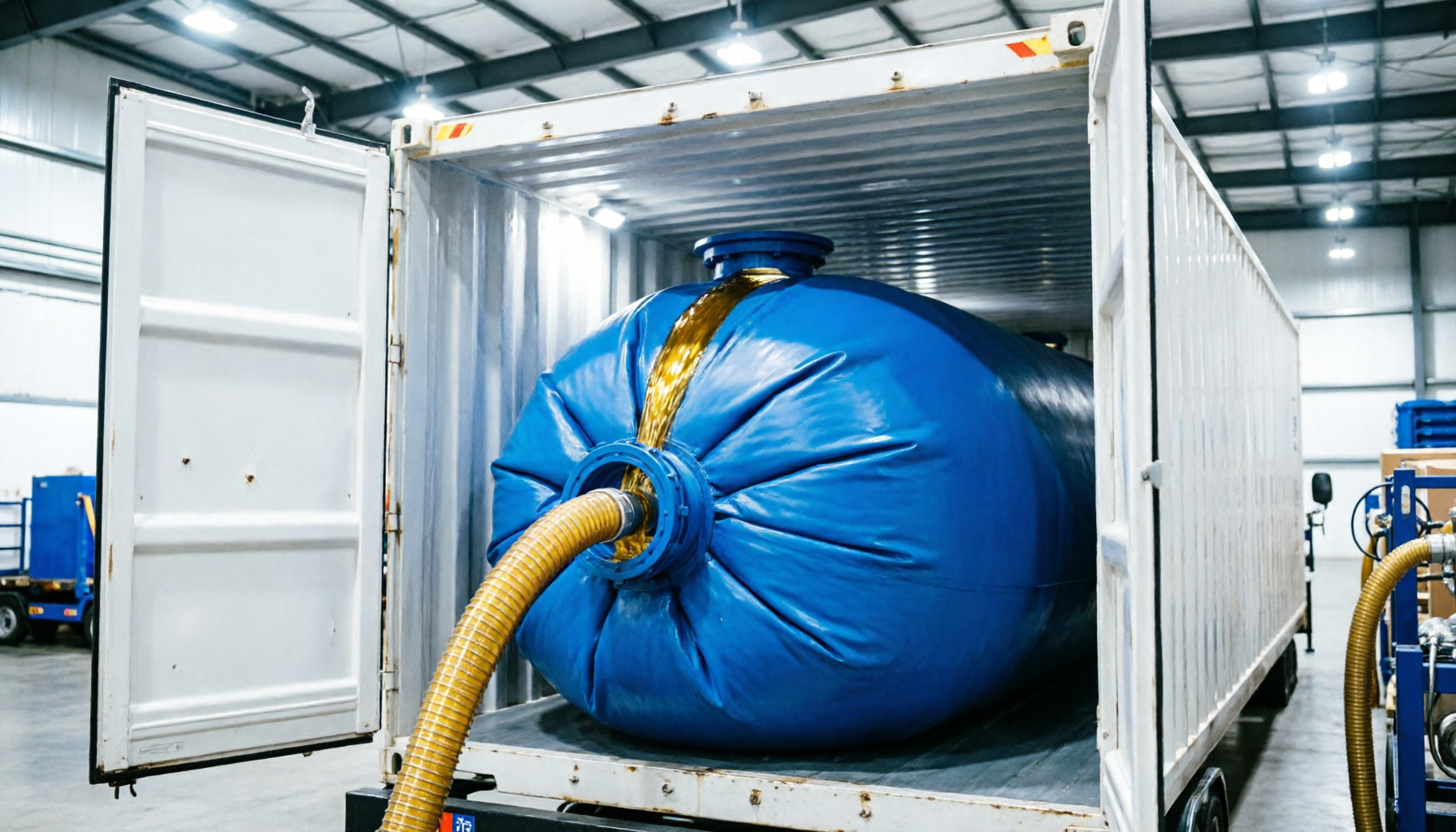
Step-by-Step Guide to Safe Loading and Unloading of Edible Oil Flexitanks
October 8, 2026
Introduction to Edible Oil Flexitank Transport
Flexitanks have become one of the most cost-effective solutions for shipping bulk edible oils worldwide. Whether you are transporting sunflower oil, soybean oil, rapeseed oil, or palm oil, flexitanks offer a flexible, single-use alternative to ISO tanks and drums that reduces contamination risk and eliminates return-trip costs. At HowFun Oil, we regularly ship bulk orders using flexitanks and have developed rigorous procedures to ensure every shipment arrives safely.
This guide walks through every step of the flexitank loading and unloading process, from container inspection to final discharge, highlighting common risks and the best practices that prevent costly spills, contamination, and cargo damage.
Step 1: Container Selection and Inspection
Proper container preparation is the foundation of safe flexitank operations. Only 20-foot standard dry cargo containers should be used; 40-foot containers lack the structural rigidity needed to contain the lateral pressure of a loaded flexitank.
Container Inspection Checklist
| Inspection Item | Requirement | Common Defect |
|---|---|---|
| Floor condition | Clean, dry, no protruding nails or splinters | Rusted patches, nail heads |
| Side walls | No dents, holes, or sharp edges | Corrosion, bent corrugation |
| Door seals | Intact rubber gaskets, secure locking bars | Cracked or missing seals |
| Interior cleanliness | Free of odors, chemicals, debris | Residual cargo smell |
| Structural integrity | No visible frame deformation | Bent corner posts |
Any container that fails inspection must be rejected. Even minor floor protrusions can puncture the flexitank under the weight of 24,000 liters of oil. Quality documentation of each inspection should be retained for traceability.
Step 2: Flexitank Installation
Once the container passes inspection, the flexitank is installed. This step requires at least two trained operators and should be completed within 30 minutes to minimize exposure to dust and moisture.
Installation Procedure
- Lay the protective liner: Unfold the corrugated cardboard or woven PP liner across the entire container floor, ensuring full coverage with no gaps at the edges.
- Position the flexitank: Carefully unroll the flexitank from the door end toward the bulkhead. Avoid dragging it across the floor.
- Secure the bulkhead: Install the steel bulkhead barrier at the door end. Verify that all locking bars engage properly and the bulkhead sits flush against the container frame.
- Connect the valve assembly: Attach the 3-inch butterfly valve to the flexitank outlet, ensuring the gasket is seated correctly. Close the valve and secure the cap.
- Final visual check: Walk around the installed flexitank and confirm there are no folds, twists, or contact with sharp surfaces.
Step 3: Loading the Edible Oil
Loading is the most critical phase. The oil must be pumped in at a controlled rate while monitoring the flexitank expansion to prevent overfilling or uneven stress.
Loading Best Practices
- Temperature check: Ensure the oil temperature is between 15°C and 35°C before loading. Oils that are too hot can weaken the polyethylene layers; oils that are too cold may be too viscous to pump efficiently.
- Filtration: Pass the oil through a 100-micron inline filter before it enters the flexitank to remove any particulate matter from the transfer line.
- Pump rate: Maintain a flow rate of 500–800 liters per minute. Higher rates create turbulence that can shift the flexitank.
- Fill volume: Never exceed the rated capacity (typically 24,000 liters for a standard 20ft container). Leave at least 2–3% ullage space for thermal expansion during transit.
- Top-loading vs. bottom-loading: Use the top manhole for filling. Bottom valve filling is acceptable only if the valve manufacturer explicitly supports it.
For oils with specific packaging requirements, such as nitrogen-flushed headspace for extended shelf life, coordinate with the flexitank supplier to ensure the tank material is compatible with inert gas blanketing.
Step 4: Securing and Documentation
After loading is complete, the container must be sealed and documented before it leaves the loading bay.
- Close and lock the manhole cap; verify the seal is intact.
- Close the discharge valve and apply a secondary seal (tamper-evident band or numbered seal tag).
- Photograph the loaded flexitank from the door end, showing the bulkhead and valve area.
- Record the exact fill volume, oil temperature, and seal numbers on the shipping documents.
- Apply container seals to the doors and record the seal numbers.
Step 5: Unloading at Destination
Unloading requires the same level of care as loading. Most flexitank damage incidents occur during discharge when operators rush the process.
Unloading Procedure
- Inspect on arrival: Before opening the container, check the door-end seal numbers against the shipping documents. Photograph any damage or seal discrepancies.
- Open the container doors carefully: Stand to the side when opening. The bulkhead may be under pressure from the oil weight.
- Connect the discharge hose: Attach a food-grade hose to the butterfly valve. Route the hose to the receiving tank with no kinks or high points that could trap air.
- Gravity discharge: Open the valve and allow gravity to start the flow. If the receiving tank is at a higher elevation, use a low-pressure transfer pump (max 1.5 bar).
- Tilt assistance: For the final 5–10% of oil, use a container tilt platform to raise the bulkhead end by 5–8 degrees. Never use a forklift to push the flexitank.
- Residual management: Typical residual is 50–100 liters. Collect residual in clean drums for secondary processing or disposal.
Common Risks and How to Prevent Them
| Risk | Cause | Prevention |
|---|---|---|
| Flexitank rupture | Sharp objects on floor, overfilling | Thorough container inspection; strict fill limits |
| Bulkhead failure | Improper installation, worn locking bars | Use new or certified bulkheads; verify engagement |
| Oil contamination | Residual chemicals, dirty hoses | Dedicated food-grade hoses; pre-use flushing |
| Valve leakage | Damaged gasket, cross-threading | Replace gaskets each use; hand-tighten only |
| Thermal expansion overflow | Insufficient ullage space | Leave minimum 2–3% headspace |
Flexitank vs. Alternative Bulk Packaging
When deciding between flexitanks, ISO tanks, and IBC totes for bulk packaging, consider the following comparison:
| Factor | Flexitank | ISO Tank | IBC Tote |
|---|---|---|---|
| Capacity per 20ft container | 24,000 L | 26,000 L | ~20,000 L (18–20 IBCs) |
| Cost per liter | Lowest | Highest | Medium |
| Contamination risk | Very low (single-use) | Medium (requires cleaning) | Low (single-use liner option) |
| Return logistics | None (disposable) | Required | Partial (pallets returnable) |
| Heating capability | Limited | Built-in steam coils | External heating pads |
Best Practices Summary
- Always use 20-foot containers in good structural condition.
- Train all operators on flexitank installation and emergency procedures.
- Maintain a complete inspection and loading log for every shipment.
- Use only food-grade hoses, fittings, and seals throughout the transfer chain.
- Never exceed the manufacturer-rated fill volume.
- Coordinate with your oil supplier to ensure the product specification matches the flexitank material compatibility.
For more information about our bulk oil supply capabilities or to discuss your specific shipping requirements, please contact us. Our logistics team can recommend the optimal packaging solution for your destination market and oil type.
Bulk Edible Oil Supply
Flexible bulk packaging options including flexitank (24,000L), IBC drum (1,000L), and steel drums (200L). Fast delivery with full export documentation.
Custom Packaging Solutions
From 100ml retail bottles to 200L foodservice pails, we offer complete packaging solutions with custom branding and label design.
Explore Packaging Solutions →Explore Our Products
Browse our full range of bulk edible oils for importers, distributors, and food manufacturers.
Need Custom Packaging or Private Label?
We offer full OEM/ODM services including custom formulation, private label branding, and flexible packaging starting from 6,000 bottles.
Explore Custom Services →See How We Help Our Clients
From restaurant chains to international distributors, discover how our edible oil solutions drive business growth for partners worldwide.
View Case Studies →Get a Quote
Fill out the form below and we'll get back to you within 24 hours